Showing posts with label Steiner. Show all posts

Friday, August 17, 2012

Why imaginative play is bad


You know all those toys the Waldorf folks encourage you to give your child?  The kind that allow open-ended play and require kids to use their imaginations?  You know what I mean-- everything from the sticks and bits you salvage from the garden to the pricey, colorful playsilks and hand-carved whatnots in the catalogs...

Sure, they're all-natural and aesthetically pleasing.  They biodegrate and even smell nice.  Heck, they're probably even tasty, if you're into that sort of thing.  But seriously, have you ever seen what kids do with that stuff?

If you're a Waldorf-influenced parent, I know what you're going to say.  You're going to adamantly insist that they play with it.  You'll tell me how they turn their play stands into shops and houses and bus terminals.  They use their conkers and tree blocks as meatballs and pancakes, dog food and money.  And with fabric and string they transform themselves into silken-winged fairies and knights, saronged princesses and shopkeepers.

Unlike barbies and action figures, these toys are open-ended.  Undoubtedly, you'll say these toys give them the possibility to stretch their imaginations to their creative limits.  And you're right, of course.  They do all that.  With these simple toys children build an endless variety of castles and forts, worlds within worlds, and these toys become as much a part of the landscape of their childhood as the earth itself.

I can't argue with you when you say that open-ended toys grow with the child, sustaining the interests and fancies of an entire household of children, boys and girls alike, for years on end.  When you say these toys outlast childhood itself, much longer than the action figure of the week or this year's must-have, googly-eyed mess of faux-fur and plastic would have, I'll concede the point.

Though biodegradable, these natural toys are the ones you'll be saving in the attic for your grandchildren, you'll say.  You'll spend hours carefully wrapping your small, coveted collection of Ostheimers to pack away with the freshly-polished wooden kitchens, castles, and dollhouses.  That is, if you can bear to be separated from them yourselves.  Yes, I know how you people think.  You wish these were the toys of your own childhood, and you get all misty-eyed and wistful at the sight of them.  Somehow you think they heal your soul.

And I'm not here to argue that point.  I get where you're coming from.  Really, I'm one of you.  I covet the tiny wooden hedgehogs and chickens, sigh at the smooth contours of silk and polished wood, and collect my own menagerie of conkers and shells, acorn caps, stones and interesting sticks.  But I still have to ask.  Have you seen what your kids do with these toys?

I mean, when you're not looking?

All that open-ended play encourages them.  They start to think that they can pretend anything with a bit of stick and silk and string.  You might think that's a good thing, and before this morning, I would have agreed with you.  But I'm here to tell you, imaginative play is bad.  When your kids' imaginations run wild, anything can happen.  Eventually, this open-ended play will take them places that neither of you would expect.  Like the doctor's office.

I'm not kidding.

While I was doing some homeschool planning yesterday, some segment of my over-imaginative children got a bit carried away with their open-ended toys and came up with a game I'm going to call "Amputee Pirate Peg-leg."  That's right--  a stick, a string, and some silk, and voila!  I can see how they might think it was a fun idea.  I mean, who hasn't been fascinated by the idea of a peg-leg?!  How do they work?  Is it hard to walk?  Et cetera.

My clever children now know the answer.  After Kitty Bill's leg was tied up behind his back and a stick was firmly attached as a stump, he discovered that yes, it is hard to walk.  And when you fall over, it actually hurts.  A lot.  More than a lot.  In fact, even after removing your stump and untying your leg, it still hurts.  By the next morning the pain in your "previously-amputated" leg is so intolerable that your parents have very grim expressions when they drag you off to the doctor's office, naturally suspecting the worst.

Luckily, Kitty Bill gets to keep his leg, but what about next time?  It surely won't be the now-forbidden game of Amputee Pirate Peg-leg, but with these kinds of unhindered imaginations, who knows which of their dangerous games will do him in next.  Blind Horse Trio.  Food Chain.  Cliff Diver Hospital.  Runaway Horse.  The Librarian and the Plague Victim.  Rabid Wolf Family.  Siamese Triplets. The Princess, the Evil Governess, and the Crazy Guy with Daggers.*

Seriously, what is wrong with my children? It doesn't take much to set them off.  These open-ended toys stretch the imagination and almost beg for it.  With sticks and a bit of string, anything is possible.

Perhaps we should have just given them mainstream toys all along.**  I have trouble imagining how a child could come up with such willful games using Barbie and Spiderman, but children shouldn't be underestimated.  Ever.


*All actual games.  Yes, my kids are a bit strange.
** I'm joking... sort of.  ;) No, really, I'm joking.

Tuesday, September 29, 2009

and foot!

While browsing through Rudolf Steiner's Prayers for Parents and Children, I was jarred to see two words in the following poem, er prayer.

The sun illumines
Stone, plant, beast and man.
Our soul enlivens
Head, heart, hand and foot.

The light rejoices
When stones sparkle,
Plants bloom, beasts run,
And people work.

So should our soul rejoice
When our heart grows warm and wide,
Enlightened thoughts grow strong,
Enheartened will can work.


In Waldorf circles it's pretty common to hear the words "head, heart, hands," but this is the first time I have ever seen them followed by the words "and foot." It goes without saying that Waldorf education, or Steiner education as they call it on this side of the Atlantic, does emphasize creative movement as an educational construct. But without saying it, it remains unsaid. Unspoken. Unemphasized. In browsing through the prayers, I notice that Steiner does emphasize it. In these prayers he mentions stepping and walking fairly often, which leads me to wonder when the words "and foot" got axed from the curricular mantra and why.

Here's a funny and brilliant TED video that reminds us to put the and foot back in education, embrace creativity, and make mistakes.


Thanks to my very dear friend MoxyJane for sharing it with me!

Tuesday, April 07, 2009

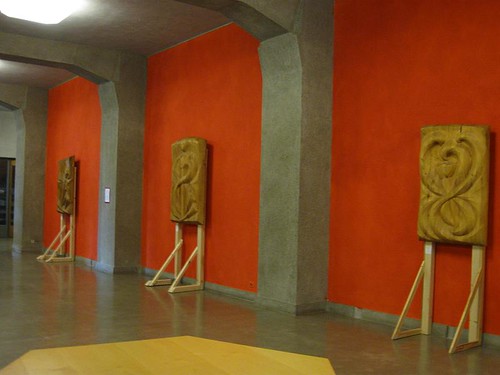
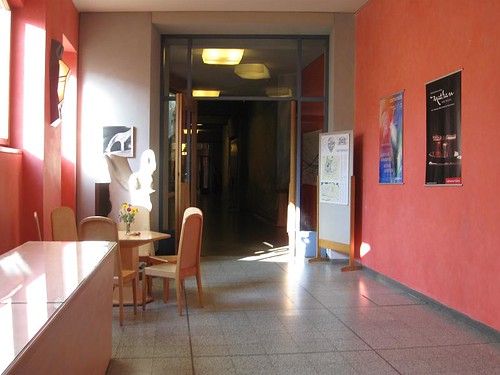
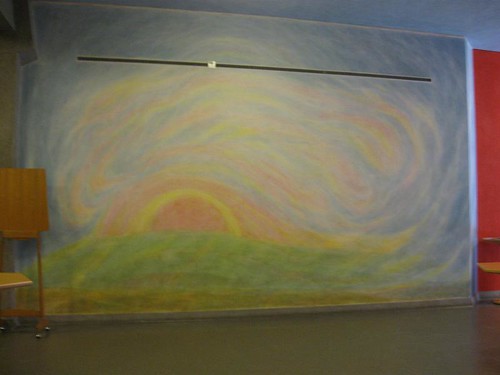
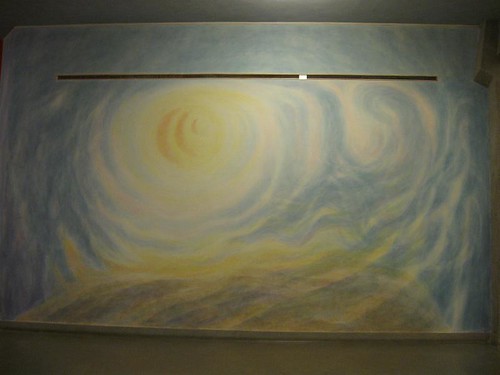
Inside the Goetheanum


A while back I promised a look inside the Rudolf Steiner's Goetheanum in Dornach, Switzerland. It's hard to know what to expect when you see the outside form of this massive structure.... but once you push open the heavy doors, it's like walking into another world.

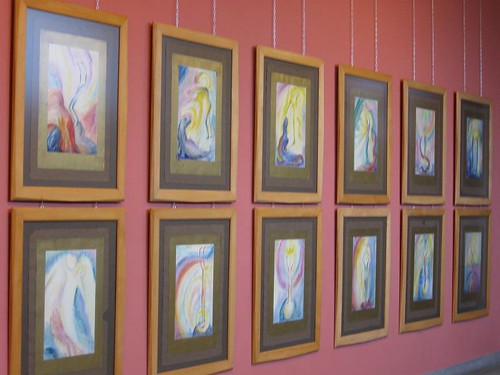
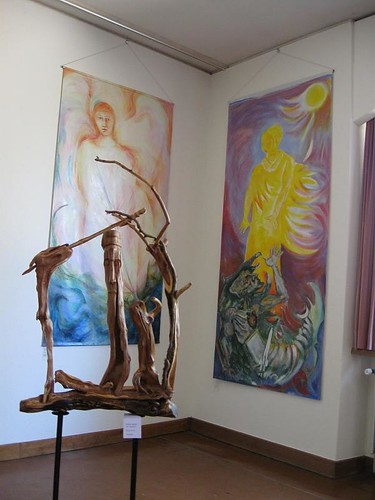
Here's a peek at the ground floor, minus the cafe, book/art stores, and bathrooms. The bathrooms were pretty nice, too. There seemed to be art exhibitions at every turn, including two huge lazured murals. This is but a glimpse, and the pictures hardly do it justice, but I think you'll get the idea.


Thursday, February 19, 2009

How did Steiner know?

A couple of months ago Sunburst went through this science-hungry phase of checking out nonfiction animal books from our tiny library. After reading three or four of them she asked me if she could write animal reports as part of her homeschooling.

I about fell over. How did Steiner know? It's times like this, when the Waldorf grades curriculum he designed meets up exactly with my daughter's interests and needs, that I have to sit back and truly acknowledge the genius of Rudolf Steiner.

So last week we began our fourth grade zoology block. I'm using Charles Kovacs's book, The Human Being and the Animal World, because I love the way he explains things. I also have a copy of Drawing from the Book of Nature, by Dennis Klocek, which is also superb. Both books start in different places though-- Kovacs starts with cuttlefish while Klocek starts with worms. It would probably have been smarter of me to follow Klocek and start with the easier drawings, but I got so excited about Kovacs's book that I jumped right in with cuttlefish.

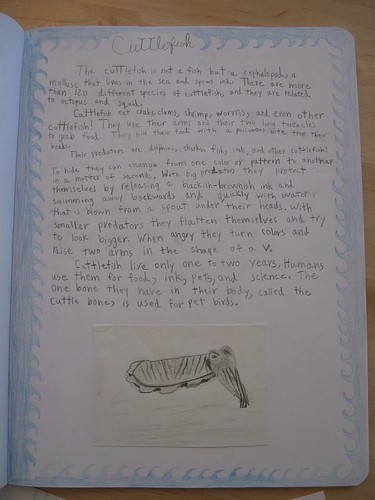
Because Sunburst wanted to actually write her own report, we talked about outlines as being a list of things she might want to know the answer to. We took the list, arranged it in groupings, and then I sent her off to find the answers. It turns out we have ZERO English-language books about cuttlefish at our library, so thank goodness for the internet! I set her up with the wikipedia page and let her go to town, and it felt like a good, safe compromise. She came back with answers and wrote a pretty decent report.

The drawing is another thing altogether. While Sunburst is happy with her drawings, and that should really be the goal here, I still feel I need to spend more time working on Klocek's idea of this "breathing tone," or shaping without any noticeable edge. We do it with crayons, but I find the sharpness of pencils lend themselves toward lines much too easily. Also, it would be fantastic to observe these creatures in real life... but we live in a city. The reality is that if we want to observe anything we'll have to go to the zoo or watch videos. Between you and me, when the windchill is 21 degrees, I'd rather preview some Youtube videos than drag kids to the zoo.

I know. Waldorf purists are shaking in their shoes; I'm breaking all the rules.

I do that sometimes.

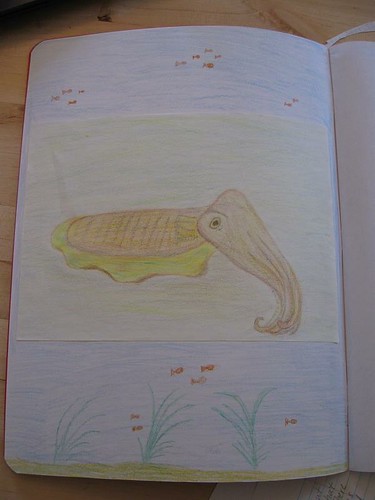
We drew our interpretations of the cuttlefish from Kovacs's book, and then made some sketches while we watched some Youtube. The colored drawing is what we came up with from watching the videos. I don't know what kind of cuttlefish it was, but it sure had longer tentacles than the one in the book. It was easy to become enamored of these little guys-- we were especially fond of the video that showed what appeared to be a mom and dad protecting a baby from the scary camera crew. It could have been a menage a tois for all I know, but it sure looked like a family to us.

Anyway, here's Sunburst's MLB entry. The drawings are pasted in from her sketchbook.


And here are my versions of the same drawings:

Monday, October 13, 2008

Waldorf Wonderland: a walk through Dornach

Dornach, Switzerland

A couple of months ago the family and I took the train to Dornach and had a little bit of a look-see.

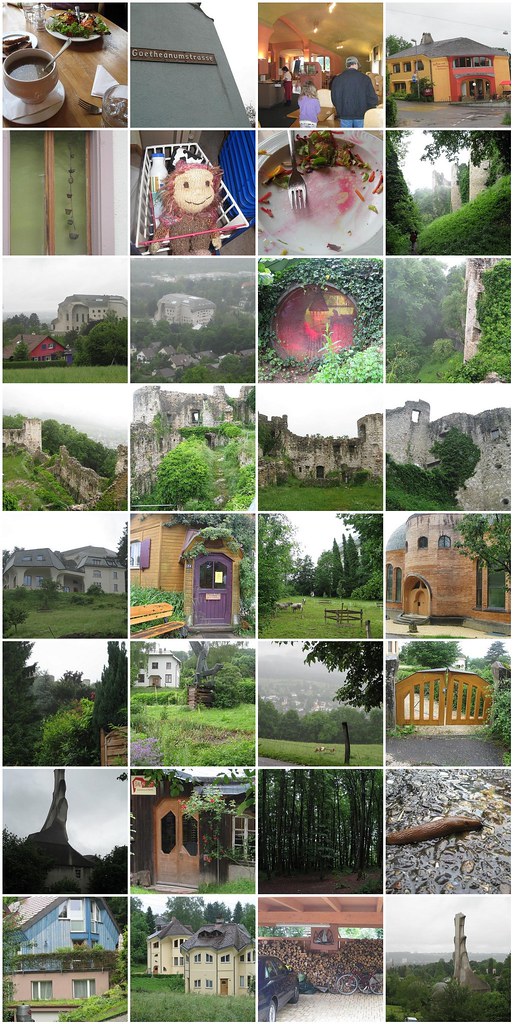
Dornach, Switzerland is the home of the Goetheanum, the Anthroposophical center of the world-- the house of dreams that Rudolf Steiner built. Or designed, rather. At myswitzerland.com they call it "an architectural concept in which each element, form and colour bears an inner relation to the whole and the whole flows organically into its single elements in a process of metamorphosis." It was totally that.

I expected to be awed by the Goetheanum, but what I didn't expect is that the whole area would be a Waldorfy wonderland. There was a bit of Steineresque styling everywhere we looked. It was remarkable and marvelous and inspiring-- even some of the gates and benches had that typical Steiner look to them. It was really a magical place.

We wandered through the grounds and neighborhood adjacent to the Goetheanum, past several amazing buildings, winding dirt paths, luscious gardens, and a sidewalk chicken-coop. We hiked up above this area where one side of the road held a forest and the other held grazing, belled-cows and a hazy overlook of the city. We had our sights on the castle ruin just up the road, Schloss Dorneck, built presumably in the 11th century. It was our first European castle, steeped in history and tales of battle, with deep wells and even a cave-like passage-way around the back. Though the place was deserted and we were free to wander at will, rumor has it that the castle is still in use today, if only as the nighttime stomping grounds of sixteen-year-olds from the local Waldorf school.

It was a chill and drizzly sort of day, so after the breath-taking views of the castle we headed back into town and stopped in at the local Steiner diner, the Kaffee und Speisehaus on Goetheanumstrasse. It was as beautiful inside as it was outside, and we gladly settled in for a vegan meal-- the best kohlrabi soup on the planet, scrumptious bread and a sampling of the salad bar.

We cruised by the local toystore, which wasn't open, and then enjoyed our rose-sniffing walk back to the train depot. It really was a glorious day which I'm hoping to repeat... though next time we'll partake of the tour inside the Goetheanum.

Sunday, July 30, 2006

First Steps

"Learning is a process, not the static image provided by an intelligence test. It's an intrinsically hopeful process of improvement. As an animal, I am also perpetually beguiled by the bumbling folly of baby animals, while also understanding what I see is not stupidity, but an early stage of a journey toward grace, competence, and comprehension."

--Becoming a Tiger: How Baby Animals Learn to Live in the Wild, by Susan McCarthy

Kitty Bill, our youngest child, stood up the other day and began to walk. He took two wobbly steps and fell. He pushed himself back up on his fat, little sausage legs and grinned at us. He took two more steps and fell. Undeterred, he stood back up and tried again. By the end of the week he can walk across the room.

Lately, I've been thinking a lot about how we learn new things. Not just how we teach our children, but how we teach ourselves. To me those ideas are connected because our children learn so much from watching us. If learning is a painful process for us... If we curse, or get frustrated when we mess up... If we chuck our knitting or statistics books across the room... If we are easily defeated and give up the first time we take a spill on the ice, they might see those things and adopt them as their own. If we make a fuss, they learn to make a fuss.

The opposite is also true. If we're sure-footed and excited about learning... If we're eager and interested... If we're accepting of new challenges and seek out new learning experiences, they will too. If they see us laugh at our own mistakes, our own follies, our own early attempts at mastering a new skill, and if we don't give up, they learn to try and try again. Of course it won't always happen this way, but we're the biggest role models our children have.

Kitty Bill isn't old enough to feel humiliated when he fails. He's still in that natural, unblemished phase of life where every moment holds some new discovery. In watching him I have to wonder if that's how each one of us started out, on shaky legs but eager to learn and discover. To taste the untasted and explore the unknown, without bias or fear or embarrassment or expectations. Imagine carrying that into adulthood and how empowering that would feel. I'm not saying that at age 35 we should go around mouthing shoes or licking the cat. But if we could hold onto our sense of wonder and eagerness and ride that horse of self-esteem into adulthood, goodness knows what we might accomplish.

As I watch Kitty Bill in this pure state of exploration, I can't help but ask myself where does he go from here? What pitfalls in learning might trip him up, and like ashes on the snow, mar his unfettered sense of discovery? When and how and why does this eagerness and self-motivation start slipping away?

I don't have the answers. I just know that I wasn't always eager to learn. Even in the recent past I have given up because I felt foolish and innane and simply not up to the task. It's not the newness of something that I find daunting, the idea itself. In reality I want to learn everything. I want to be perfect at it the first time out: bowl a 3oo game, play a symphony, hit the ball out of the park. Completely unrealistic, but there it is.

The part that trips me up is the falling. The failing. The making a complete ass out of myself part. If you're not the kind of person that can laugh at yourself, and most people aren't, then the hurdles of learning appear a bit larger than they actually are. It's like looking at your pores with a magnifying glass. Of course you're going to look hideous and pock-marked. But isn't that what we're doing when we critically examine each and every attempt at learning as a separate thing? When we focus too much on one critical aspect and lose sight of the whole, the bigger picture?

Learning isn't like that. That's like focusing on a two inch square of one of Monet's water lilies. We would think it was blurry crap. Maybe he did, too, since he painted so many of them. Maybe he was just trying to get it right. Maybe he didn't know the first one was outstanding. Maybe Manet came along and laughed at him, and said, "You call that a water lily? Ha!" Manet was dead by then, so it would have to have been his ghost. Or what if Rembrandt's ghost came along and fashioned a grade on Monet's water lilies. Imagine Rembrandt, with his exacting eye for the smallest detail, came along and put a big honkin' red F on Monet's sort of hazy way of painting the world.

What if you and I were graded on a daily basis, on each task laid out before us? Overcooking pasta might earn us a C, while forgetting to buy cat litter, yet again, would get a big fat F. Could you imagine living in that world? Two nights ago I finished knitting my first adult sweater. It took me months of agony, and it looks ok. It's not perfect. But I'm proud of it. Who knew I could follow the directions and knit a sweater?! But if some knitting genius came along and gave me a grade on it. If they turned it inside-out and examined every seam I guarantee they would find plenty of mistakes. It would not hold up to that kind of scrutinty. Would I ever dare to knit a sweater, or anything, ever again? If someone graded my first row of stitches, I might not have even tried knitting a dishcloth, let alone a sweater.

Learning is hard work. Those first steps can be traumatizing if we let them be. If we fall off the horse and never get back on, we may never know what it's like to gallop fearlessly on with the wind whipping through our hair. If we don't learn how to overcome our own hurdles, how can we learn to teach?
"Teachers and educators must be patient with their own self-education, with awakening something in the soul that indeed may sprout and grow. You then may be able to make the most wonderful discoveries, but if this is to be so, you must not lose courage in your first endeavors.

"For you see, whenever you undertake a spiritual activity, you always must be able to bear being clumsy and awkward. People who cannot endure being clumsy and doing things stupidly and imperfectly at first never really will be able to do them perfectly in the end out of their own inner self... If once or twice you have succeeded in thinking out a pictoral presentation of a lesson that you see impresses the children, then you will make a remarkable discovery about yourself. You will see that it becomes easier to invent such pictures, that by degrees you become inventive in a way you never dreamed of. But for this you must have the courage to be very far from perfect to begin with."

--The Kingdom of Childhood: Introductory Talks on Waldorf Education, by Rudolph Steiner

Tuesday, June 06, 2006

Summer begins

It feels a lot like summer over here. The dog days feel like they are upon us. The pools are open, the tomatoes are in full bloom, the mustard greens are bolting, and the eggplant leaves are covered in little black hoppers. Forget the delicate Spring flowers, they are beyond dead.

But what about this school thing? Are we ready to put our chalkboard and crayons away and call it quits? That's the talk on all the Waldorf message boards: how are you celebrating the end of the school year; or we have x,y,z to finish up; or should we even take a break at all?

To me this schooling thing doesn't have such a clear division. That's the unschooler in me. I know we're going to learn loads this summer, but as a mom who is offering that "school-like" experience to Sunburst, I get what they're saying. Do we go out with pomp and circumstance? Do we worry about marking off everything on our lists? How far and how long do we push the school envelope?

Surely there are things we haven't finished around here. We officially started our first grade lessons in November after welcoming a new baby into our lives, selling our house, and moving out of state. Those things took priority over "school" and Sunburst spent August and September teaching herself to read with McGuffey Readers and knitting up a storm.

Sometime in late October I purchased a first grade syllabus from Christopherus Homeschool to see what a first grade year entailed. It turned out to be a great resource. Although I didn't exactly follow the lesson examples, it did give me some insight as to what we might want to cover. According to the book I seem to have left out a whole section on fairytales and handwriting, learning word families, and another maths lesson. We started late, so inevitably we were bound to leave things out. Will she be damaged forever? Probably not.

As much as I'd like to press on, as much as Sunburst would probably benefit from the lovely fairytales and handwriting practice, I don't see how we could do it all as a homeschooling family. If you follow a Waldorf curriculum there's just so much to pack into your day. If we kept school hours without interruption, maybe we could do it all, too. But I'm living in the real world, washing dishes and folding laundry and changing diapers. I'm fitting in lessons as I can, when Kitty Bill is napping or squeezing them in between snack time and dinner preparations. It's not easy, but it's fun.

If I really pushed myself, would it still be fun? If I scheduled every second of my day to try to find more time, would any of us enjoy ourselves? Hurry up and eat. Hurry up and learn. That's not my agenda at all.

Summer seems to be here. It's not holding back waiting for us to finish up our lessons. The warm days are calling us into the garden, out in the yard, onto the swings, and out on the lake. It's just as difficult for me to focus on lessons as it is for Sunburst. So we're done. We've begun scheduling our summer fun-- circus day camps and fiber arts lessons. We're going to have a blast.

And strangely enough, this week's entry for Ruldolf Steiner's Calendar of the Soul seems to validate our inability to focus intellectually and our need to move on:
  The senses' might grows strong
 United with the gods' creative work;
 It presses down my power of thinking
 Into a dreamlike dullness.
 When godly being
 Desires union with my soul,
 Must human thinking
 In quiet dream-life rest content.
English translation by Ruth and Hans Pusch
Related Posts with Thumbnails
 
Site Meter